When I first arrived in Marseille, I didn’t like the city very much. Before going there, I had heard that it was dangerous and full of pickpockets. The whole city struck me as extremely restless, chaotic, and disorderly. But after spending a day and a half there, I was won over by its lovely, warmhearted people.
Having experienced waiters in Hong Kong and Paris, I have an extremely low bar for service—the only basic requirement is that they bring me my food. So when the waiters in Marseille welcomed me with smiles, chatted with me for a bit before taking my order, and even asked how I had enjoyed my meal afterward, my heart practically melted in the warm sunshine of southern France.
One of the waitresses was adorable. With a slightly shy excitement, she smiled and told me it was her first day at work. Later, when the food arrived, she slowly arranged the dishes while saying to me, “Look, I’m trying to make them look a little prettier.”
This was the first time I had ever encountered anything like that. I wished her all the best and waved goodbye to her before I left. Sometimes you know you may never see someone again in this lifetime, but there is happiness in being a brief ray of sunshine in each other’s lives.
For lunch, I had mussels in cream sauce with fries at a restaurant by the harbor. I ate at a leisurely pace, watched the passersby, and contemplated life along the way. I remember a question from my French textbook: “être
ou avoir?” (to be or to have). What France has taught me, I think, is that compared with having things, existence itself is a blessing. I don’t need to own any expensive bags or clothes. I am here, whether eating or simply sitting in a daze, and that is the meaning of life.
Something romantic happened at the soap museum in Marseille. While I was looking around, a sixteen-year-old boy from a tour group ahead of me struck up a conversation. He was shocked when he heard my age—I was twice as old as he was.
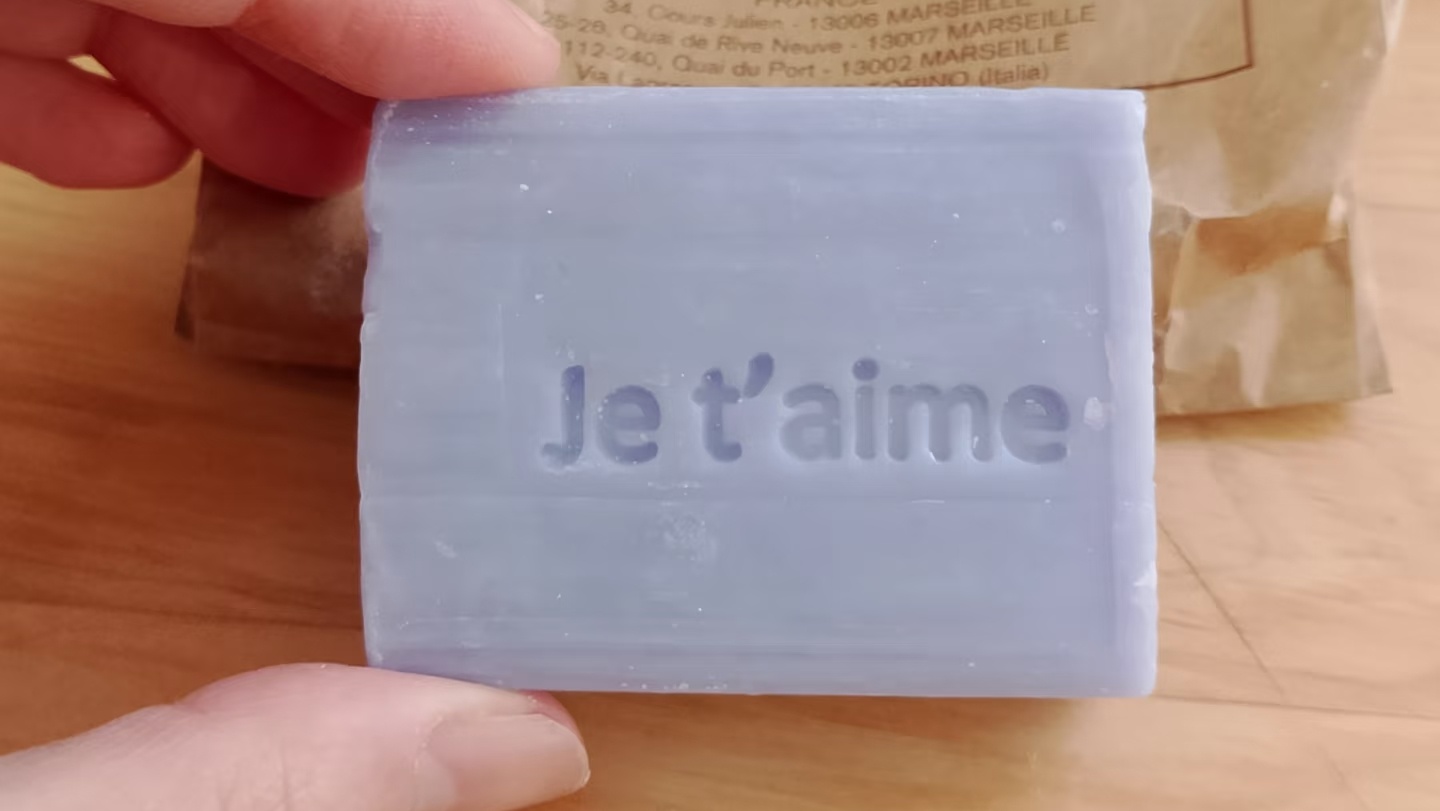
We talked briefly before his parents called him away to join a soap-making workshop, and I continued my visit. A little while later, he ran over and handed me a paper bag, saying it was a gift for me.
When I got home and took it out, I discovered that it was the bar of soap he had made in the workshop. It was stamped with “Je
t’aime” (“I love you”), and I instantly melted at this unexpected romantic gesture.
Just think: a sixteen-year-old boy expressed his affection for me in front of his family—when the boy and I said goodbye, they gave me a meaningful look. How could a middle-aged girl like me, raised from childhood to suppress her true feelings, possibly withstand that? After all, my parents and teachers guarded against teenage romance as if they were guarding against robbers.
This kind of spontaneous yet passionate romance is probably the charm of Marseille.