Prices really are low. The same flat white that generally costs €5 in Paris is only €3 in Kraków.
The square resembles those in many other European cities. Horse-drawn carriages travel along the surrounding streets, and everything is very clean, making it feel a lot like Vienna.
Milk bars (despite not actually serving milk) are quite distinctive. They are Polish canteens, similar to Hong Kong-style cha chaan tengs. When they are crowded, you may have to share a table, and you need to clear your own dishes. For the first time in my life, I tried sweet dumplings: apple pierogi. However, I couldn’t really get used to Polish food.
Some interesting little shops are tucked away deep inside alleyways. Remember to check their Google ratings before visiting.
Poland suffered terribly during World War II. Because there was a particularly large Jewish population here, Auschwitz and several other camps were established around this city. Schindler’s Factory (yes, the factory from the film Schindler’s List) is also near the city center. Remember to book tickets for both about a month in advance.
Museums in Poland are generally free on Tuesdays. For the one I visited that houses an original Leonardo da Vinci painting, you need to collect a ticket on-site, after which you can choose any admission time. The Eagle Pharmacy (which also helped many Jewish people at the time) is free on Wednesdays. You need to collect a ticket from the office next door before entering.
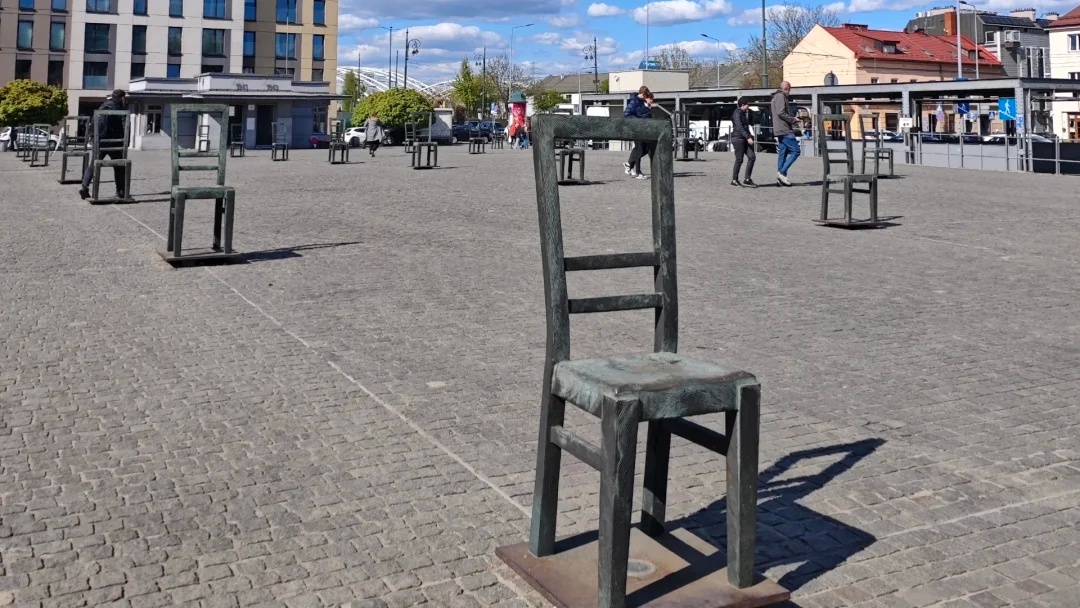
The pharmacy is very small, but it contains an enormous amount of information. Inside every cabinet is an entire booklet or photo album documenting the real experiences of Jewish people during the ghetto period. Before being sent to the camps, they were confined to the southern part of the city. Remnants of the ghetto wall still remain today—they are exceptionally tall and look like tombstones. People needed permits to enter or leave, and only those capable of working were allowed to do so. Everyone had to wear an armband bearing a Jewish symbol. As the population continued to grow, many families eventually became crammed into a single apartment, with no quality of life whatsoever.
After visiting the pharmacy, I had very mixed feelings. It was difficult to believe that such cruelty between human beings had occurred only a few decades ago. I thought of the words in the Bible about remaining vigilant at all times. At the same time, my heart was filled with gratitude that our generation lives in relative peace, something we sometimes take for granted.
The locals were generally friendly, and the service was excellent everywhere, with no tips expected. However, some shop assistants had limited English.
In the next post, I’ll share the stories of the people I met in Kraków. Stay tuned!