It has been more than a year since our internships ended, and many of my classmates from the same cohort still have not found jobs, so last Thursday I went with them to a job fair exclusively for women working in tech.
Registration was required beforehand. According to my friend, a younger student she knows who was looking for an internship was turned down. I had not expected there to be an eligibility threshold.
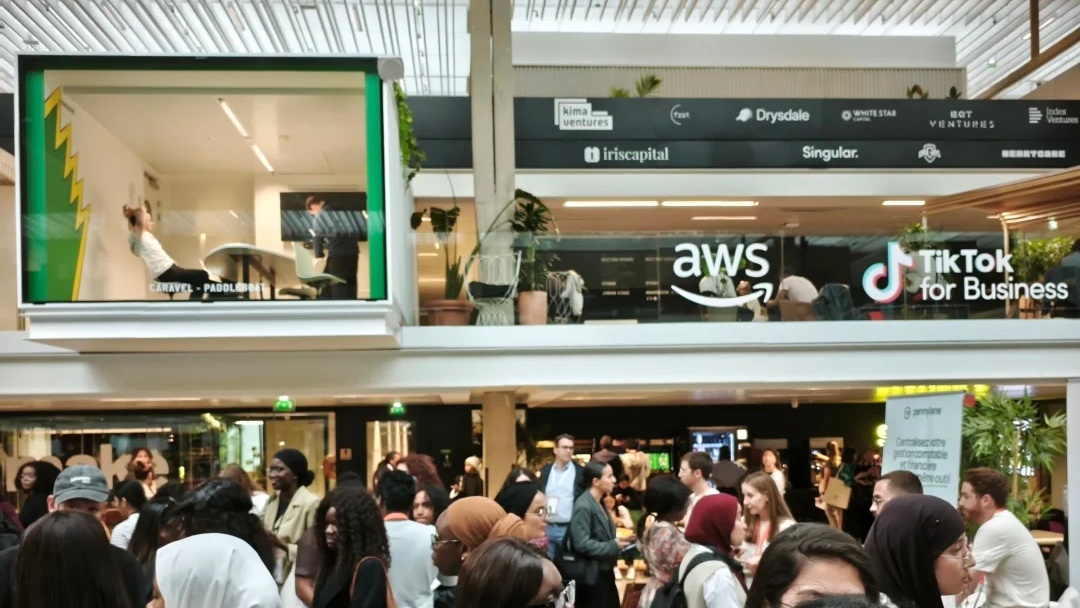
The event was held at Station F. Before we even went inside, we saw a very long line, though it moved quickly. Once inside, we first collected our name badges, which were printed for us on-site, and then inserted them into paper holders ourselves.
Quite a few companies attended, including large, established firms in banking, finance, and consulting, such as BNP, AXA, and TALAN; AI companies such as Mistral AI; and some startups.
As the image shows, many of the openings were for permanent contracts (CDIs), followed by apprenticeships and internships, while there were relatively few vacancies for fixed-term contracts (CDDs) and freelance roles.
The event was very orderly. At each company’s booth, everyone lined up and patiently waited for the person ahead of them to finish speaking with an HR representative or technical lead. If the conversation went well, they would scan the code on the attendee’s name badge, which gave them access to the CV we had uploaded to their website in advance. The whole process felt a little like a first-round interview, but compared with applying online, it brought us closer to HR and gave us the opportunity to ask many questions.
For example, after speaking with several HR representatives, I confirmed that a large number of junior positions have disappeared in recent years, although the situation for senior roles is still relatively good. One representative said that because of the development of AI, many companies are taking a wait-and-see approach, and there is considerable uncertainty about the future. Perhaps everyone will eventually realize that AI cannot replace junior employees in the short term and reopen more positions, or perhaps they will find that AI really can replace them—in which case we will simply have to accept it.
However, many of the positions we asked about required more than five years of experience. At the booth of an aircraft manufacturer, I was explicitly told that they only hire French or Indian nationals. She said the company had opened a branch in India and that some parts were manufactured there. This made me realize that France seems to have relatively close ties with India, since Indian graduates are also granted a two-year APS rather than the usual one year.
I also asked some HR representatives whether they look at LinkedIn. One said that they mainly review CVs and do not look at LinkedIn. They also mentioned that the first interview is conducted directly by phone, so someone like me, who generally does not answer phone calls, would probably miss many opportunities.