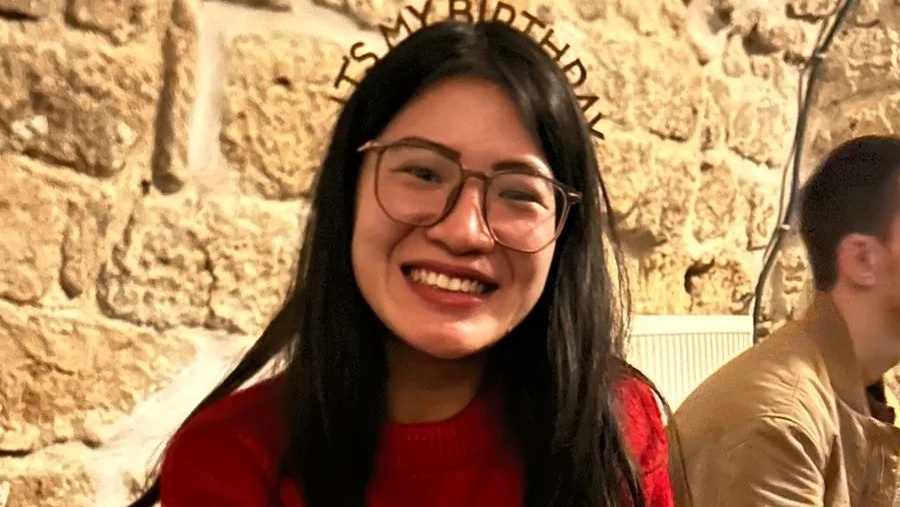
Because over the past three years, she not only moved from Hong Kong to Paris and successfully switched careers into tech, but also went from knowing no French at all to earning DALF C1! From now on, she can call herself an impressive person with C1 proficiency in both English and French.
Yesterday, I received my results from the exam center. I scored 60/100 overall, with 50 required to pass: 8 in listening—what a close call, because scoring below 5 in any section means you cannot pass C1—22 in reading, which was in line with my usual performance, 13 in writing, which was about what I expected because halfway through the first piece I suddenly realized I had gone off-topic, and 17 in speaking, which was better than expected.
I officially started learning French in February 2023, so this March marks exactly three years. When I registered last November, I thought that since it had been almost three years, I might as well challenge myself and try taking the C1 exam.
My French improved significantly on three occasions:
The first was when I enrolled at a school in France. Although my program was taught in English, we had French classes every week. When I started looking for an internship a year later, I was probably somewhere between A2 and B1.
The second was during my internship at a French company. In December 2024, our school organized a TFI exam, and my results were B2 in listening and B1 in reading. Writing and speaking were not tested.
The third was while preparing for this exam. In fact, my French barely improved at all throughout 2025. Apart from watching French TV series with French subtitles and listening to French songs, I maintained only a minimal level of input. So before I began preparing, I was probably still somewhere between B1 and B2. Raising my French from that baseline to C1 in three months really took everything out of me—I even filled an entire notebook with notes while working full-time. I had previously asked many friends who had taken the exam, and they all said B2 should be no problem, but C1 would still be difficult. So passing this time truly feels like a miracle.
I formally prepared for the exam from December through the end of February. At the time, I had a lot of unused TTA—additional remote-work days—so I worked from home for most of December, saving a great deal of commuting time that I could use to study French.
This proves that even if you start learning a language at 30, you can still reach C1 within three years. By comparison, it took me 18 years to reach C1 in English, so besides the time you invest, the method you use really matters too.