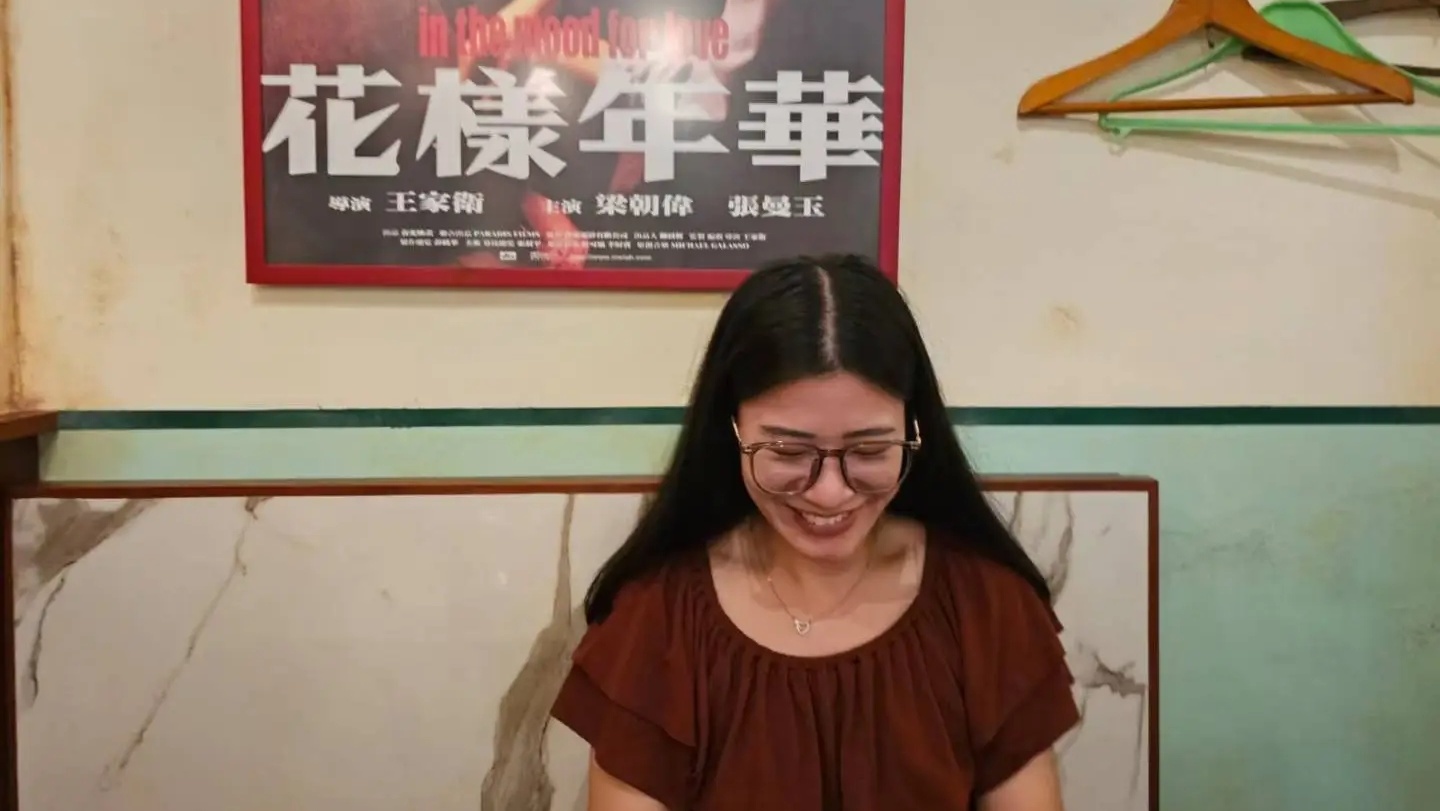
It’s been a long time since I last talked about Hong Kong.
My first two years working in Hong Kong were quite difficult. To establish myself there, I needed to keep my job and visa. I did not earn much, yet everything was expensive. I was not used to the food in Hong Kong, and I felt very uncertain about whether I should stay for seven years to obtain permanent residency. All these reasons once made me want to return to mainland China—I even used a vacation in Chengdu to find a job in the public sector. Later, some friends pointed out some of Hong Kong’s advantages to me, and my salary increased, so I stayed.
Leaving your comfort zone and adapting to another culture is extremely difficult. If I had to sum it up in one Chinese character, it would be: “endure.”
During my seven years in Hong Kong, I lived entirely independently. While studying for my master’s degree, I shared a dorm room of about seven or eight square meters with two roommates, and we slept in bunk beds. After I started working, I shared a 35-square-meter apartment in eastern Hong Kong Island with another roommate, going through three different roommates over three and a half years. Later, I lived alone in an 18-square-meter apartment in western Hong Kong Island.
Struggling on your own is, of course, hard. Looking back now, I do not even know how I got through my student years. Perhaps people truly are highly adaptable: to survive, they can endure any hardship. As someone from mainland China living in Hong Kong, I found it difficult to fit in at first, when I could barely speak Cantonese. It was a kind of cultural incompatibility. Although we looked similar, people’s attitudes changed as soon as I opened my mouth. Language is the vehicle of culture. If you make an effort to speak someone else’s language, they will feel that you respect their culture, which narrows the psychological distance between you. Fortunately, I have some aptitude for languages, so I soon had no trouble ordering food, shopping, or handling simple questions and answers. At work, I mainly used Mandarin and English.
In Hong Kong, apart from a few like-minded friends from mainland China, I had very few friends who were purely local. Instead, most of my friends had diverse cultural backgrounds—some had emigrated and later returned, some had studied abroad, and some had come from other countries to work in Hong Kong. I was more comfortable using Mandarin and English than Cantonese, and there were not many locals in my workplace. In addition, I was somewhat worried that they might be exclusionary, so I tried to befriend people from different cultural backgrounds. Such people generally have an “open mind,” which is very important to me.
You make friends as you travel through life, and, of course, you also lose them along the way. In more serious cases, people have blocked me, and I have blocked others. In any case, I came to understand that the world is vast and full of people who do not care about you or even dislike you. Wasting time on that is simply not worthwhile. My approach is to let myself think about it when it comes to mind. Once the thought has passed, I dust myself off, stand up, and keep moving forward.
Ultimately, it comes back to my “life-as-a-bus theory”: life is like driving a bus. Different routes lead to different destinations, and the scenery and people you encounter along the way also differ. Some are passersby with whom you merely exchange a nod; some are fortunate enough to travel alongside you for a while, but in the end, they too are passengers who get off when they reach their stop. Sometimes you are stuck in traffic and cannot move forward; sometimes the journey is smooth all the way. When you finally pull in and stop at the terminus, you suddenly look back and realize that life is nothing more than a journey. All you can do is enjoy the present while learning to live with solitude.