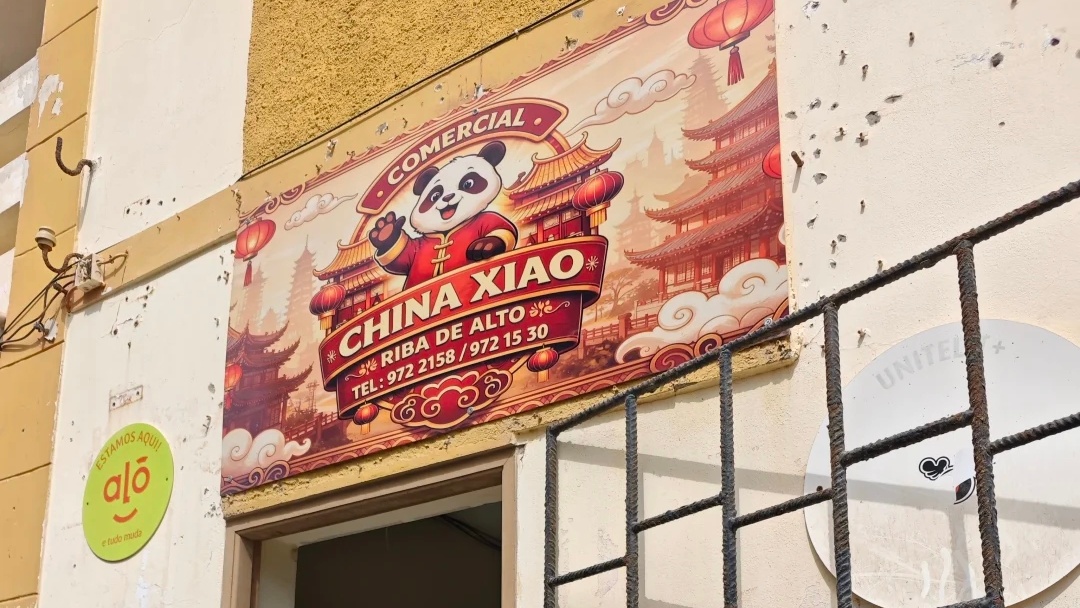
I recently traveled to Cape Verde, an island country in West Africa and a former Portuguese colony. Although I had never even heard of this lesser-known tourist destination before, it has quite a few medium-sized supermarkets run by Chinese people. When I asked one of the owners, I learned that she was from Wenzhou. On top of that, many of the restaurant owners I have met while exploring eateries in Paris are also from Wenzhou, as is my landlord. So I wanted to write a post about this remarkable Chinese community.
At the time, I asked the female shop owner in Cape Verde what had made her think of coming to such an obscure African country to open a store. She said she had come to join relatives 20 years ago.
That suddenly reminded me of a conversation I had with my landlord a few months earlier. He also runs supermarkets in French Guiana, in South America, and occasionally returns to France. Curious, I asked him why there were so many people from Wenzhou in Europe—or, for that matter, all over the world.
He gave several reasons. First, Wenzhou is extremely short on resources and cannot support such a large population. He said, “At least you can still farm in Sichuan. Where we come from, there isn’t even any farmland, so we had no choice but to leave.” Immigration regulations were also relatively relaxed at the time, making it easier to remain abroad.
Second, those who had already settled overseas would bring over their relatives and fellow villagers one by one, forming communities whose members helped and supported one another. He himself had not received much education and came to France with his uncle when he was around 20. More than half the people from his village now live abroad. Indeed, the female shop owner I met in Cape Verde confirmed this pattern.
Third, they have a strongly business-oriented mindset. He does not place particularly high academic expectations on his children; a bachelor’s degree or even a vocational college diploma is enough. What matters more is their ability to make money once they enter society—mainly by becoming business owners and doing business. They believe it is better to be a business owner than a highly paid employee.
This had a major impact on the meritocratic outlook I had always held. I feel that, because of my traditional education, I still retain something of a student mindset even now: the belief that as long as I study hard, I will be able to attain the life I want. In reality, however, life is shaped by many dimensions, including family resources, personal connections, insight into the market, an understanding of explicit and implicit rules, and the management and investment of assets.
I used to think that the Chinese traiteurs in Paris were inauthentic because they sold Chinese, Japanese, and Korean food all at once—to the point that one of my colleagues told me his favorite Chinese food was nem. But now I see them in a completely different light, because behind each of those restaurants is a hardworking Wenzhou family striving to put down roots here.